The lesson the Celtics coach quietly taught us.
Joe Mazzulla, the head coach of the Boston Celtics, recently got hit with a question from a kid reporter. The kid asked how he pushes players to improve while keeping the game fun.
Now if you’ve ever watched one of his press conferences, he can be a tough nut to crack, but this time he didn’t toss out coach-speak. He paused, shifted around for a second, and then admitted it’s not easy for him.
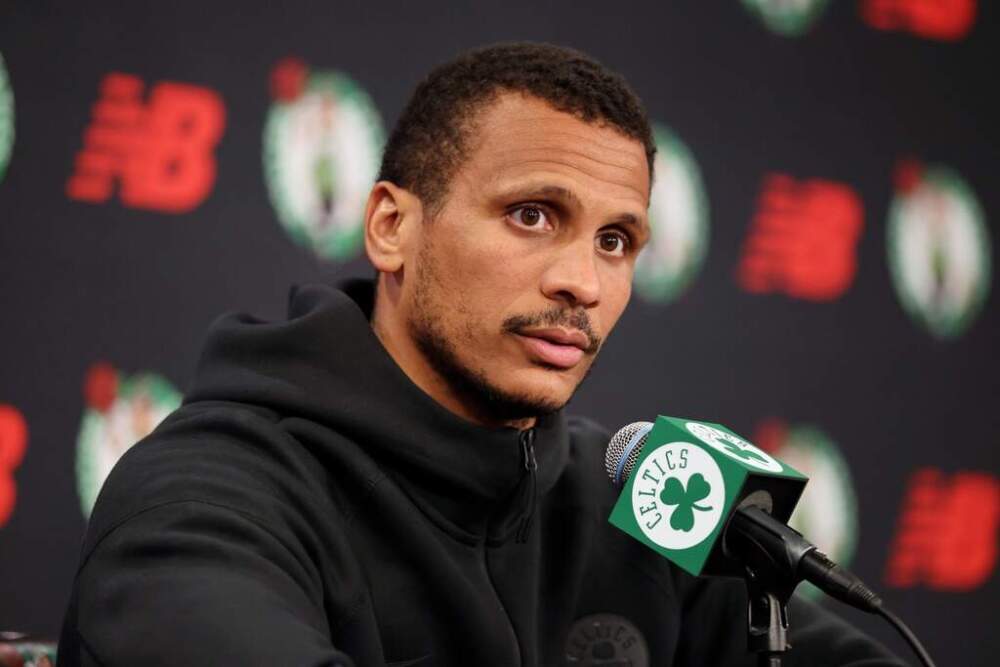
He said everyone has a different definition of fun. For some players, fun means winning, for others, it means competing. For others, it might be a moment of freedom on the court where instincts take over. He even said the word fun turns into a cop-out when things go sideways. When people start saying, “Let’s have fun,” they might be avoiding hard stuff under the surface.
And he tossed one more nugget at the kid. “As you get older, kid, don’t use it. ‘I want to have fun.’ What does that even mean?”
As a New York sports fan, it’s hard to agree with what anyone from Boston has to say. But he wasn’t wrong.
We throw the word fun around without thinking about it. “Work should be fun.” “Keep things fun.” “Fun workplace culture.” “Make it fun for the team.”
It sounds good in an Instagram story or on a motivational poster in a conference room. Yet ask someone to define fun and watch them freeze like you asked for their ATM passcode.
But fun is easy when you win a playoff game or close a huge deal. High moments already deliver the payoff. It’s everywhere else where things get tricky. The in-between hours. The grind. The three-hour Zoom block where your soul leaves your body. The late-night spreadsheet session. The meeting where someone says “circle back” with full seriousness. Where is fun hiding in there?
This is where people love that Mark Twain line. “Find a job you enjoy doing, and you will never work a day in your life.” Nice idea. Inspirational. Framed in offices everywhere. Also, kind of bullshit.
Work is work. Even your dream job includes slog moments.
I worked in morning radio for a couple of decades in the heart of New York City. It was a dream gig. Celebrity interviews. Live shows. Real energy.
Still, the only drawback was waking up at 3 a.m. every day. I would hit long stretches where I felt wiped out, stressed, or fried. Loving the job did not erase the tough parts. The tough parts were baked in.

So, if fun isn’t the right measure, what is? A vibe might fit better. A spark. A lift. Something inside your brain firing in a direction that says, “This matters.” You might not feel giddy. You might not feel pumped. But you feel alive enough to move with purpose.
There are people who feel that spark while building slide decks. Some get it while organizing spreadsheets. Others find it during a long string of meetings. It sounds strange, yet those tasks bring order, progress, clarity. That is a vibe. And a vibe often keeps people going far longer than fun ever will.
Fun fades. A vibe sticks.
A vibe is that sense of momentum when you figure out a problem after staring at it for hours. It is the energy that hits when a project suddenly clicks. Or the tiny rush you get when someone says your idea changed their day in a small way.
Fun is high peaks. A vibe is steady flow.
Fun is unpredictable. A vibe is built.
Fun is a party. A vibe is a purpose.
In the end maybe the Celtics coach had it right. Stop asking for fun. Fun shows up whenever it wants. Instead, figure out what your personal spark looks like. What gives you momentum, signals progress and pulls you inward instead of draining you?
Define that. Build around that. Chase that. And if fun shows up along the way, great. If not, you still built something stronger. A vibe keeps you going. And honestly, that feels like the real win.